
Shall we just stop calling it social prescribing?
07 Feb 2019
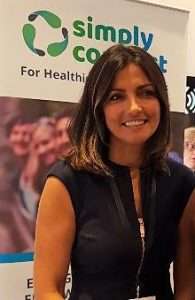 Blog by Sirinda Bhandal, Simply Connect
The NHS Long Term Plan states 1,000 link workers in GP practices by 2021 to support patients to access community services, now known as social prescribing. We all know the statistics that 20% of patients visit their GP for issues that don’t require a medical intervention and that often its practical advice, emotional support or help managing a condition, such as lifestyle advice.
Whilst it’s great social prescribing is now going to be embedded within the NHS and an integral part of the healthcare system, what is a little frustrating for the VCSE sector is that social prescribing is being hailed as something new, when it isn’t really.
The term was coined so medical professionals could understand and buy into it, so we all get this, but is it time for a change?
The VCSE sector have been doing it for years, we just didn’t call it that. The only thing that is new, is now it’s seen as something that should be embedded in the NHS, delivered by NHS staff in GP practices.
But is that really where social prescribing is best delivered?
Many socially isolated people don’t visit their GP, says Dr Helen Salisbury in a recent article, yet these are often the people most likely to be in need of social prescribing interventions.
The third sector are socially prescribing everyday
When I worked for a Council for Voluntary Service (CVS) in Sheffield, people would drop into our Volunteer Centre, very often in crisis situations and dealing with low level mental health issues. Some were long term unemployed and saw volunteering as a way to support them back to work.
Before they were ready to volunteer, they would often need support. As we were already working with the voluntary and community sector we knew exactly where to refer them into and could explain the support services on offer.
Often people would end up volunteering at the very services that had supported them. It’s well documented that people with lived experience provide the best support to others in their situation, which is why lots of people go on to volunteer or even work for the charities.
It is also proven that volunteering provides long term benefits for improving mental health and wellbeing and helping people feel more connected in their community, isn’t that what social prescribing is all about? (See Volunteering Matters Barriers & Benefits report and Doing good does you good.)
This is something Volunteer Centres and CVS have been doing up and down the country for at least 50 years, probably even longer, I know VA Sheffield was established in 1926.
I think we should stop calling it social prescribing
OK there, I’ve said it! But I’m sure I’m not alone in thinking this?
We know the term social prescribing was coined so clinicians understood it, but now they do, can we change it?
What does it really mean to the person on the street?
I put this to the test and asked 10 random people at a recent family gathering, ‘if I said the term social prescribing, what would it mean to you?’ Answers ranged from…
‘I’ve absolutely no idea!’
‘Prescriptions for people receiving social state benefits’
‘Prescribing something social? But not sure what’
‘Is it something to do with social media, or having prescriptions online?’
The last response was from a 16 year old boy, who heard the word ‘social’ and thought it was something to do with social media.
Social is just one possible outcome of social prescribing. If you are living with domestic abuse, you may need legal advice, practical and emotional support. t’s not just about referring people into Tai Chi classes and knitting clubs.
Before it can become a mainstream, everyone needs to understand what it is
And I’m not saying we have all the answers. The term ‘prescribing’ suggests being ‘done to’ rather than educating and empowering people to help themselves. Person-centred care focuses on the person, their wants and needs and giving control back, being prescribed to doesn’t really reflect that in my opinion.
I asked Dr Chris Manning, a retired GP and strong advocate of social prescribing, what it meant to him. ‘It’s about helping people with whatever it is they need, to get their lives back’. I like that, because that’s exactly what it did for me when I accessed asocial prescribing service a few years ago, support from someone with lived experience really helped me.
We feel its about providing the emotional, practical, social or lifestyle help and advice that people need to feel happier, healthier and more in control of their own lives
In order to really raise the profile of social prescribing (whatever we decide to call it) everyone needs to know what it is. The police, ambulance services, social services, the library, pharmacists, post office, etc, the whole population.
Medway council have this vision, they are building a single point of entry for social prescribing across the town. One gateway into quality assured community services to support social prescribing, which will be owned and managed by local voluntary sector partners. This will then be promoted more widely to the general public, statutory, NHS services.
Will the money just stay within the NHS?
The NHS 10-Year Plan states that primary care networks can choose to employ their own link workers or workers from the sector – we will have to wait and see how this pans out. But keeping the funding within the NHS will do little to sustain social prescribing and how will the VCSE cope with increased demand on their services?
Red Zebra, Involve Kent and Social Enterprise Kent have been funded with investment from the Department of Health and local CCG’s. All of these projects have link workers based in the practice. They meet with clients, get to know and understand the person and what matters to them before supporting them into services. The staff are employed by a voluntary organisation who are based in and understand their local community and the range of community services available.
Dr Anna Clarke, a Croydon GP told me she saw the Link Worker role as ‘consultants of community’ with community sector knowledge and experience.
Doesn’t this sit better within the third sector?
The three organisations mentioned above are committed to making social prescribing accessible to everyone. You don’t have to go into the GP practice to access the service, you can access it online too.
Who’s supporting social prescribing?
With this increase in demand on the third sector, there will be an increase in demand for the support they need. This is the role of the infrastructure organisations. They exist to build capacity in the third sector, to support them with commissioning processes and more.
To give an example, over 930,000 volunteers in the north of England contribute £67 million to charities each year, charities wouldn’t survive without them. It is our Volunteer Centres and CVS that help make this happen! Why is their funding being cut at a time when we need them the most?
While the NHS Five Year Forward View outlined a commitment to developing stronger partnerships with VCSE organisations as part of a ‘new relationship with patients and communities’, in many areas commissioners are not prioritising these relationships’, says the Kings Fund.
Missed opportunity
Now has never been a better time to engage with the sector for advice on how to roll out the schemes in each locality. Shouldn’t we be funding existing frontline services to deliver a more holistic social prescribing service where it is already working well? Fund organisations like Volunteer Centres and CVS to support people in their communities before they get to their GP and support the third sector to deliver the services.
Janet Wheatley, CEO of Voluntary Action Rotherham, who has been running a nationally renowned social prescribing scheme since 2012, told me when we were discussing the sustainability of social prescribing…
You wouldn’t expect a medical prescription for free, so why should you a social one?
She’s absolutely right. Crawley CVS have a model where the money does follow the referral – be interesting to see if this continues. But if we don’t invest in the sector we run the risk of increasing demands on already stretched services resulting in the client having a bad experience and a negative perception of the third sector.
A final plea, please don’t re-invent the wheel!
If I could say one thing to commissioners it would be build on what’s working well in the community. I’ve lost count of the times I’ve sat in meetings and heard LA’s say they are going to setup another directory of community services that the VCSE will update online and it will provide a great resource for the public to access community services.
If it was that easy, everyone would be doing it and using it to socially prescribe. How many out of date directories out there that the VCSE don’t update, why would they? I’m all for technology as an enabler, but everything doesn’t magically happen online. You need people on the ground, working with the VCSE to support it.
If a local organisation already has a city-wide online directory of services where the VCSE go to find volunteers, update their data– use that. Don’t invest hundreds and thousands of pounds creating something new that the VSCE sector don’t own and won’t buy into.
Your VCSE partners are your community experts, make use of them!
We would like to hear from you. Are you delivering a social prescribing project? Would you be interested in writing a blog for us? Our audience of mainly VSCE would love to hear from you.
Also I’m on a panel at the local government think tank event below. If you (as a VCSE) could give one piece of advice to commissioners, what would it be?
About the author
Sirinda Bhandal has worked in the voluntary and community sector for over 20 years, helping to capacity build the VCSE sector through effective use of digital, and leading on co-production of digital platforms for the VCSE since 2008.
Sirinda is Founder and Managing Director of Simply Connect and is involved in helping to shape social prescribing delivery models around the country. Simply Connect work with the VCSE sector, local authorities and CCG’s to support social prescribing nationally.
Sirinda will be speaking as part of the Disruptor’s Panel at the NLGN Annual Conference 2019: Secret Agents of Change on 26 February 2019 at Guildhall, London.
A really helpful and informative blog.
Thanks for penning it and your commitment to new ways of thinking and working that will benefit both communities and the health health of those living within them.
There’s 2 good articles in the British Journal of General Practice, Jany 2019 issue: “How to move from from managing sick individuals to creating healthy communities” and “Social Prescribing – where is the evidence?”
I’ll email them over
With very best wishes
Chris
Thanks Chris we will check these out and link to them from our website, keen to build up our useful information resource.
Great article! Thank you 🙂